

Most advice on installing windows in cold weather assumes winter is hard on the window. For the window itself, it usually is not. Once a kiln-dried, factory-finished timber frame is in the wall, it copes with a hard January for decades, and a sealed unit is built to sit through frost. What struggles below 5 °C is everything used to fix, seal and finish around the frame: gun foam, expanding tape, sealant, mortar, plaster and touch-up paint. The frame is the robust part of the job. The chemistry is the fragile part.
So the useful question is not whether a winter job can go ahead. It can, and plenty do. The real question is whether the crew plans around one number printed on nearly every can and cartridge in the van, and whether they know what that number refers to. This page covers what changes on site below 5 °C, which materials need a different product or a longer wait, and the few jobs that are better moved to spring.
Short on time? The standard fitting sequence is covered in our guide to what happens on site during a timber window installation. If you already have dates and sizes, send them to [email protected] and mention that the fit is planned for winter.
What the 5 °C on the label measures
Read the small print on a can of gun foam or a cartridge of window sealant and the minimum temperature usually covers three things: the product itself, the surrounding air, and the surface the product goes onto. On site, people tend to check only one of them. Usually the air. Often on the van dashboard.
The wall has not read the label.
Brick and block hold the night's cold for hours. On a still morning after a frost, the inside face of a freshly opened reveal can stay several degrees below the air temperature until late morning, and on a north elevation it may barely catch up all day. An air reading of 6 °C at nine o'clock tells you very little about the surface the foam is about to touch. The masonry may be at 2 °C, it may be wet from the old frame's failed seal, and it may carry a film of condensation the moment the room behind it warms up.
The thermometer also misses moisture. Cold air holds very little water in absolute terms, even when the relative humidity reading looks high. Single-component polyurethane foam cures by drawing moisture from the air and the substrate, so in a cold reveal the cure slows on two counts: the reaction is sluggish, and there is less water for it to use. For that reason a sensible winter crew carries a surface thermometer, often an infrared one, and checks the reveal rather than the sky.
Installing windows in cold weather: material by material
Not every material on a window job reacts to cold in the same way, and that gets lost when the advice is reduced to "avoid fitting in winter". The table below sets out what tends to go wrong and what a crew can do about it. Exact temperatures depend on the product, so the data sheet for the specific foam, tape or sealant overrides any general figure.
| Material | What cold does to it | Weak point on site | Winter option |
|---|---|---|---|
| Standard PU gun foam | Expands less, cures slowly, coarser cell structure | Can shrink, crack or keep moving after the trims are on | Winter-grade foam rated for lower temperatures, cans kept warm overnight |
| Pre-compressed expanding tape | Recovers far more slowly below about 10 °C | Joint still open when the crew leaves | Rolls stored warm before use, longer recovery time allowed |
| Silicone or hybrid sealant | Skins and cures slowly, bonds poorly to frost or moisture | Bead looks neat, adhesion is not there | Applied to a dry, frost-free surface above dew point, protected while curing |
| Mortar and plaster for making good | Frost can damage it before it sets; dries unevenly | Cracks, crumbling or bloom in spring | Protect or postpone; external lime work held back if frost is forecast |
| Waterborne touch-up paint | Film forms poorly on cold or damp timber | Touch-ups soften, stay tacky or flake | Touch-ups left for a dry, milder day and noted on the handover |
| Timber frame and sealed unit | Little direct harm from cold | Thermal stress from heaters, condensation when brought indoors | Covered, dry storage; no heaters aimed at the glass |
Read down the third column and a pattern appears. Hardly any of the weak points show on the day. They show weeks or months later, often after the installer has been paid.
Foam in a cold reveal
Gun foam fills the gap between frame and masonry. It insulates and helps with airtightness. On a correctly fitted timber window it is not what holds the frame in place: frame fixings and packers carry the load, and the foam fills around them. The full fixing and packing sequence is in the installation guide linked above, so it is not repeated here.
Cold changes how the foam behaves. A standard foam dispensed into a reveal at a couple of degrees tends to expand less than expected, so the fitter adds more. It then cures slowly, and while it is still curing it can keep moving. As the wall warms over the following days, or when the heating goes on in earnest, partly cured foam can continue to expand. Where the gap was overfilled to make up for the weak first rise, that pressure goes into the jamb. A timber frame tolerates far less inward push than a masonry reveal, and a sash that closed sweetly on the day can start to bind at the head or the lock side a fortnight later.
The opposite failure happens too. Foam that never cures properly can shrink back from the timber and leave a fine air path behind a trim that looks perfect. That leak then shows up as a draught in February, and the window gets the blame.
What helps:
- Winter-grade foam. Several manufacturers make low-temperature formulations for exactly this situation. Check the minimum on the can against the surface temperature, not the forecast.
- Warm cans. Foam stored overnight in a freezing van comes out thick and uneven. Cans kept in a heated cab or indoors dispense far more consistently.
- Restraint. Fill to the manufacturer's recommended depth and accept a slower rise. Topping up a cold bead is how jambs get pushed.
- Patience before the trims go on. Cure times on the can are usually quoted at around room temperature. In a cold reveal, expect considerably longer.
One common summer habit does not carry over: misting the reveal with water to speed up the cure. On a frosty morning the mist freezes on the masonry and adds a layer of ice for the foam to sit on.
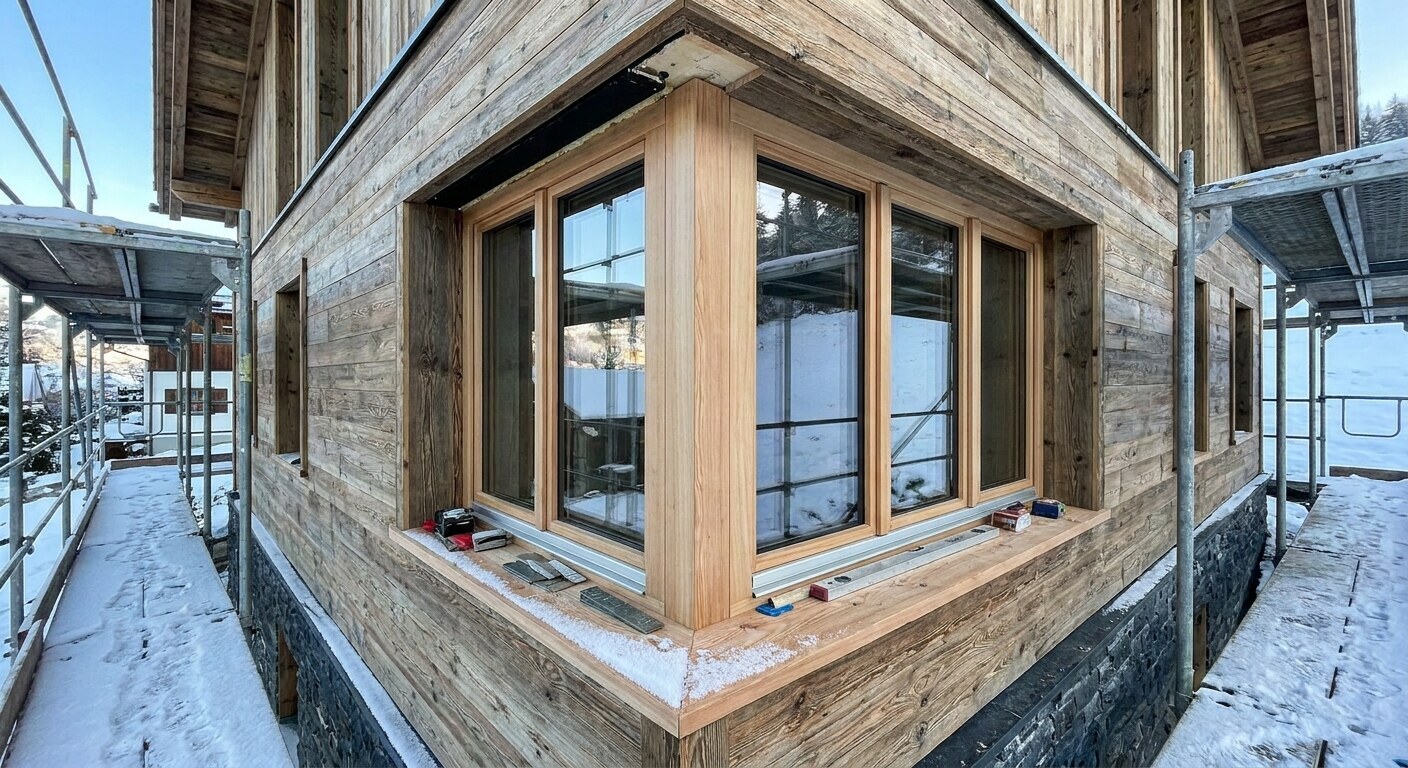
Tapes, sealant and the damp film you cannot see
Pre-compressed expanding tapes are often recommended for winter fitting because they avoid the foam problems above. They do. They bring their own problem, though. Below roughly 10 °C, tape manufacturers such as Tremco illbruck note that recovery slows markedly. A tape that closes its joint fairly quickly in summer can take much longer in a cold reveal, which means the window can look finished, with the crew gone and the van loaded, while the joint behind the trim is still open.
The fix is simple: rolls stored somewhere warm until the moment they are cut, and a crew that allows for the slower recovery instead of assuming the summer timetable. Some tape makers allow gentle warm air to speed things up after fitting. Whether that is acceptable depends on the specific product, so the data sheet decides, not habit.
Sealant is where the hidden moisture causes trouble. Every perimeter bead depends on adhesion, and adhesion depends on a dry, clean surface. In winter that surface is frequently neither. The masonry may carry rime frost on an external face that never sees the sun. On the inside, the moment the room warms, warm indoor air meets a cold reveal and deposits a thin film of condensation that is hard to see and easy to feel. A common recommendation in sealant data sheets is that the substrate should sit around 3 °C above the dew point. That margin often disappears on a January morning.
Wiping frost with a cloth does not dry it. It turns ice into a smear of water. Better options are to seal later in the day when the surface has warmed, to let a gentle background temperature build in the room without pointing a heater at the joint, or to accept that the external bead goes on another day and protect the joint in the meantime. A bead that looks neat and peels away in March is worse than a bead that goes on a day late.
Glass and frames: what the cold does and does not do
One question comes up repeatedly: can windows crack in extreme cold? It is a reasonable worry, but cold is rarely the culprit.
Frost seldom breaks a sealed unit. A space heater pointed at one occasionally does.
Glass fractures under thermal stress when one part of a pane is much warmer than another. The edge of a pane sits inside the frame rebate and stays cold. If a site heater blows warm air onto the centre of the glass on a freezing day, the centre expands while the edge does not, which puts the edge in tension. A crack can start there, typically running in from the edge at roughly a right angle. That is why fan heaters and gas heaters should face the room, not the new glass.
Cold does affect sealed units in a harmless way. The argon in the cavity contracts on a hard frost, and the panes can bow inward very slightly. Reflections of straight lines, such as a neighbour's roof edge, may look a little wavy on a freezing morning and straighten out as the day warms. That is normal behaviour, not a defect.
Timber is also less sensitive to temperature than people expect. Its thermal movement is small. Moisture is what makes wood move, and winter's real threat to a frame is water, not cold: rain on unprotected joinery left in the garden, or damp from a wet reveal soaking into an end grain that was cut or exposed on site.
If you are still choosing the frames rather than the fitting date, the timber window range shows the profiles and opening types first, and timing can be planned around them later.
Delivery and storage in the days before fitting
Frames leave our Kalnciems factory with the TEKNOS finish already applied, which protects them well once installed. Before that, a lorry delivery onto a frozen drive creates a different, short-lived risk: the days between unloading and fitting.
What works in winter is fairly unglamorous:
- Store frames upright or on bearers, off the ground, under cover and out of the rain.
- An unheated garage or a dry, empty room is better than a heated living room. Bringing cold joinery into a warm house overnight and then fitting it into a freezing opening the next morning puts the timber and the glass through two quick swings instead of none.
- Do not wrap frames tightly in polythene. In winter, trapped air condenses on the inside of the wrap and holds water against the coating.
- Expect condensation on cold glass and frames brought indoors. Let it evaporate on its own; do not dry it off next to a radiator.
If a property has no dry, covered space for the frames, the sensible move is to push the delivery back until the fitting date, even if that means waiting longer for the windows. Joinery standing in a front garden through a wet week can arrive at the wall carrying moisture it will spend the spring giving back.
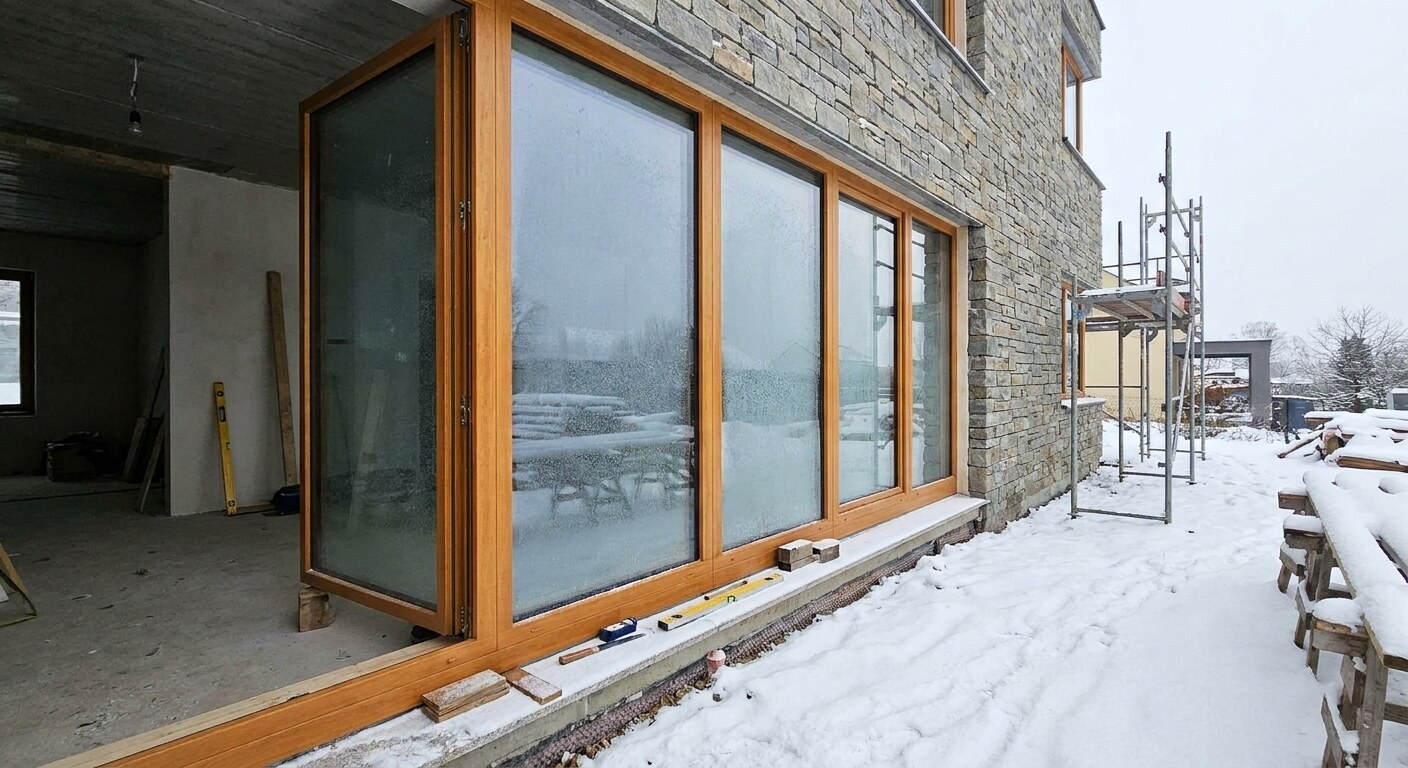
Making good, plaster and the spring call-back
When a winter-fitted window gets a call-back the following spring, the complaint is often not about the window at all. The sash closes, the seals bite and the glass is clear. The fault is a hairline crack in the plaster running along the frame line, sometimes with a slightly crumbly edge where the reveal was patched. Typically the making good went onto a cold, damp reveal and was then dried hard once the heating came back on. The plaster set badly, shrank and parted from the timber.
That is not a window problem, but it is how a householder judges the job. Two practical consequences follow:
- Making good is often the part of a winter job that is worth splitting off. Fit and seal the windows, protect the reveals, and plaster once the masonry has dried and warmed. Most mortar and plaster data sheets ask for frost-free conditions while the material sets, and that is harder to guarantee in a reveal that was outside air the previous day.
- Expect more moisture in the house for a week or two. Wet plaster gives off water, and new windows are usually far more airtight than the ones they replace. The result is condensation on the inside of brand-new glass, which worries people more than it should. Open the trickle vents, keep the rooms ventilated and give it time. Our guide to condensation on windows explains why this fades and when it does not.
Touch-ups to any coating scuffed during fitting fall into the same category. Waterborne coatings need dry timber and a temperature on the tin that a winter afternoon may not provide. Note the scuffs, leave them, and treat them on a mild, dry day using the method in our step-by-step painting guide. A rushed touch-up on cold wood tends to need doing twice.
When a winter job should wait
Winter fitting is workable for a large share of ordinary replacements. Not all of them. These are the situations where moving the date costs less than going ahead:
- Period houses that need lime making good or lime render. Lime cures slowly and frost damages it while it is still green. Many lime practitioners avoid external lime work when frost is forecast, so a winter fit there often means a second visit anyway.
- A long freeze forecast, with an installer whose van holds only standard foam and sealant. The materials can be swapped. If the answer to "what do you use below 5 °C?" is a shrug, the date should move.
- An exposed, wet elevation in a run of storms. Tapes and external beads need a dry window of time. A gable taking driving rain day after day may not give them one.
- No dry storage for the frames, as covered above.
- A household that cannot cope with cold rooms, for example a young baby or someone unwell, where several openings would be out at once.
Winter also has an advantage that tends to get overlooked. On a cold, windy evening, a new window is tested by the weather on the day it goes in. A draught at the perimeter can be felt with the back of a hand before the installer has left the street, and the methods in our guide to finding draughts around windows work just as well on a new frame as on an old one. A January job gets tested the same night. A June job keeps its secrets until November.
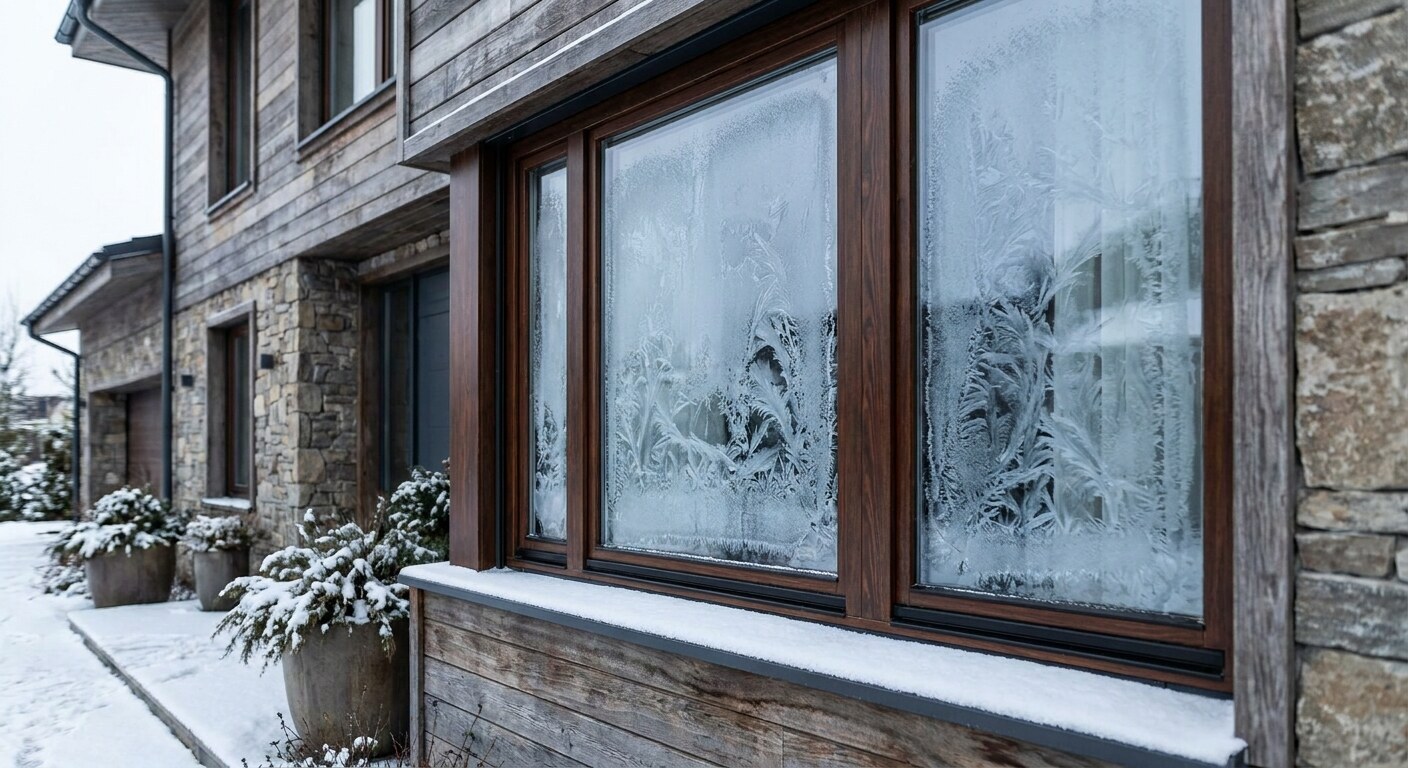
Five questions to ask before agreeing a winter date
Before you agree dates for installing windows in cold weather, these questions separate a crew that has planned for the season from one that is crossing its fingers:
- Which foam and sealant will you use, and down to what temperature are they rated?
- Do you check the surface temperature of the reveal, or only the air?
- How many openings will be out at once, and how is each one closed off if the day runs short?
- Where will the frames be stored between delivery and fitting?
- Will the making good and touch-ups be done on the day, or on a return visit once conditions allow?
Good answers are usually specific and slightly boring. A product name, a number and a plan for the last hour of daylight are reassuring. Being told "it'll be fine, we do it all year" is not a plan.
Questions about winter fitting
Can windows be fitted when there is frost on the ground?
Yes, provided the surfaces being sealed are free of frost and moisture when the sealant and tape go on. Frost on the lawn matters far less than rime on the reveal. A crew working on a frosty morning will usually fix frames first and leave the external bead until the masonry has warmed and dried later in the day, or until the next suitable day.
Should the heating stay on while the old windows come out?
Keep it on but turned down, and close the doors of the rooms being worked on. A low background temperature helps fresh foam and sealant on the inside face. Avoid pointing portable heaters at the reveals or the new glass, because concentrated heat dries plaster too quickly and can put the glass under thermal stress.
Why does a new window look slightly distorted on a freezing morning?
Most likely because the argon inside the sealed unit has contracted in the cold and the panes have bowed inward very slightly. Reflections look a little wavy, then straighten out as the temperature rises. If the distortion stays the same all day, or the unit mists between the panes, ask for it to be checked.
How long should trims and making good wait after a winter fit?
Until the foam and sealant have cured according to the manufacturer's data sheet at the real site temperature. Published cure times are usually given for mild conditions, and a cold reveal can take considerably longer. Plastering is often best left until the masonry has dried and warmed, even if that means a return visit.
So what are you dealing with: a sheltered terrace where a January date is perfectly sensible, or an exposed gable that would be better tackled in April? Put your opening sizes into the window configurator, mention which way the elevations face, and add a couple of photos of the existing reveals when we reply. That is usually enough for us to say whether winter suits your job, or whether the frames should wait in the factory a little longer.
Windows Latvia, Kalnciems factory
Need Expert Advice?
Our team can help you choose the right windows for your project - from energy ratings to installation.
Get a Free Quote