

Contents (12 sections)
- The Only 3 Paint Types Worth Buying
- Why Exterior Wooden Windows Need Specialist Paint
- Top Paint Brands for Exterior Wooden Windows in 2026
- Surface preparation and weather: read the dedicated guide
- Brushes, Rollers, or Spray?
- Common Mistakes We See Every Year
- Maintenance Schedule After Repaint
- When Repainting Is the Wrong Answer
- Our Factory Coating System
- Frequently Asked Questions
- Related Articles
- Next Steps
If you are standing in front of the wall of exterior wood paints at B&Q or Wickes, you are probably about to make a mistake that will cost you your weekend and ruin your windows within five years. The product on the tin matters less than how it goes on the timber, but among the products themselves the gap between the right specification and a generic exterior gloss is real, and it is bigger than most homeowners assume.
The question most homeowners ask us at our factory in Kalnciems: what is the best paint for exterior wooden windows, and does it actually matter which one you buy? The difference between the right product and a cheap DIY-store alternative can be fifteen years of service versus four. This guide distils what we specify on 15,000 m² of windows we ship across nineteen countries each year, adapted for homeowners repainting their own frames.
The Only 3 Paint Types Worth Buying
If you want the one-paragraph version, choose one of these:
- Waterborne acrylic (TEKNOS Aquatop, Sadolin Superdec, Teknos Nordica Eko) - for most modern exterior timber windows. Breathable, flexible, UV-stable, low VOC.
- Microporous alkyd (Dulux Weathershield Ultimate, Sikkens Rubbol XD) - if you need deeper pigment penetration on bare or lightly weathered wood.
- Linseed oil paint (Allbäck, Selder & Co) - for listed buildings and heritage restoration where authenticity matters and the wood can breathe freely.
Avoid standard household gloss and any "exterior wood paint" from the bargain shelf. They form an impermeable film that traps moisture, and moisture is what rots wooden windows.
Why Exterior Wooden Windows Need Specialist Paint
A window frame sitting outside faces five hostile conditions simultaneously: ultraviolet radiation, cyclical wetting and drying, temperature swings from -20°C to +40°C across the year, airborne pollutants, and mechanical stress from wind-driven rain. Standard emulsion or interior gloss cannot handle this. They crack within two seasons, admit water, and the timber beneath begins to degrade.
Specialist exterior timber paints solve this by being microporous. The cured film lets water vapour escape outward while blocking liquid water from entering. This matters because freshly milled pine and oak still exchange moisture with the atmosphere for years after manufacture. Trap that moisture, and the frame swells, the paint film ruptures, and the whole system fails.
If your windows are in a listed building or a conservation area, product choice is not only about durability - it is about compliance. In England and Wales, works to external joinery on a listed building require listed building consent before any coating change, and conservation officers routinely specify a linseed-oil or traditional breathable finish rather than a modern acrylic. Historic England and your local authority planning office are the authoritative references. Check before you buy the paint, not after.
The Three Paint Categories Compared
| Paint type | Lifespan outdoor | Best for | VOC level |
|---|---|---|---|
| Waterborne acrylic | 8-12 years | Modern timber windows, DIY | Low |
| Alkyd (oil-based) | 6-10 years | Bare softwood, south-facing | Medium-High |
| Linseed oil | 5-8 years | Listed buildings, heritage sashes | Very low |
| Standard household gloss | 2-3 years | Avoid - not suitable | Medium |
Waterborne acrylics dominate the modern market because they combine microporosity with excellent UV stability and a much lower VOC footprint than the solvent-based products they replaced. A quality waterborne acrylic on properly prepared timber lasts eight to twelve years before a maintenance coat is needed. On our factory windows with the ECO 92 and Premium 115 profiles, we specify a TEKNOS multi-coat waterborne system that achieves our published sixty-year structural lifespan.
Top Paint Brands for Exterior Wooden Windows in 2026
These five brands consistently rank highest in independent durability testing and in the specifications issued by architects across Northern Europe:
TEKNOS (Finland)
The brand we coat every factory-finished window with. Their Aquatop 2600 topcoat and Antistain Aqua primer form a waterborne acrylic system specified by Passivhaus builders and heritage specialists alike. Widely available through trade merchants, occasionally sold direct to consumers in the UK and Ireland. Expect to pay £60-£85 per litre.
Sadolin (Denmark)
Household name in the UK for exterior wood. Sadolin Superdec is an opaque waterborne acrylic that covers well and bridges hairline cracks. Easy DIY application, available in most larger B&Q stores and trade shops. Price around £50 per 2.5 L tin.
Sikkens (Netherlands)
The Rubbol range is an industry reference. Rubbol XD is an alkyd (solvent-based) topcoat that many professionals still prefer for bare softwood on south-facing elevations where UV punishment is greatest. Strong odour during application; higher VOC than waterborne alternatives.
Dulux Trade Weathershield (UK)
Ubiquitous in British merchants. The Ultimate line is a decent waterborne option for occasional homeowner use. Not at the TEKNOS or Sikkens performance tier, but cheaper and easier to find on a Saturday morning. About £40 per 2.5 L.
Ronseal 10 Year Weatherproof Wood Paint
The UK DIY-shelf default. If you walked into any B&Q, Wickes or Screwfix this weekend looking for exterior window paint, Ronseal's 10-Year is probably what the shop assistant would hand you. Its advantage is availability and price (around £17 per 0.75 L). The "10 year" claim refers to film integrity under UK average conditions, not continuous gloss retention - on a south-facing sill you will see chalking sooner. For most owners who want a competent, easy-to-find option and are realistic about 7-8 years of service, it does the job. Not a heritage or passive-house grade product, but honest value.
Zinsser AllCoat Exterior Satin
Professional UK-market hybrid that adheres to almost anything, including previously painted surfaces without stripping, and glass primer. Around £21 per litre. Popular with trade painters because it shortcuts the "did I strip enough old paint" question. Not a replacement for proper preparation on compromised timber, but a sound product for sound substrate.
Allbäck Linseed Oil Paint (Sweden)
The heritage choice. Traditional linseed oil, nothing more, hand-ground with earth pigments. Takes days to dry fully, needs recoating sooner than acrylics, but behaves identically to the paint your listed Georgian sashes were originally finished in. Often the only option conservation officers will approve.
Brand Pricing and Coverage
| Brand | Price (2.5 L) | Coverage | Key strength |
|---|---|---|---|
| TEKNOS Aquatop 2600 | £150-£200 | 10-12 m²/L | Factory-grade durability |
| Sikkens Rubbol XD | £110-£140 | 11-13 m²/L | Bare wood penetration |
| Sadolin Superdec | £50 | 12 m²/L | Easy DIY, crack-bridging |
| Dulux Weathershield | £40 | 14 m²/L | Budget waterborne option |
| Ronseal 10 Year | £17 (0.75 L) | 12 m²/L | UK DIY-shelf availability |
| Zinsser AllCoat | £21 (1 L) | 10 m²/L | Adheres over sound old paint |
| Allbäck Linseed Oil | £75 (1 L) | 10 m²/L | Heritage, conservation officer approved |
Surface preparation and weather: read the dedicated guide
We do not repeat the full 6-step prep sequence or the weather rules here, because they already live in our standalone manufacturer guide: How to paint wooden windows: 6-step manufacturer guide. The short version is this: even £150 paint will peel within twelve months if applied over damp timber, soft rot, direct midday sun, or temperatures below 8°C. The protocol matters more than the product. Go and read that piece first, then come back here to pick the paint.
Brushes, Rollers, or Spray?
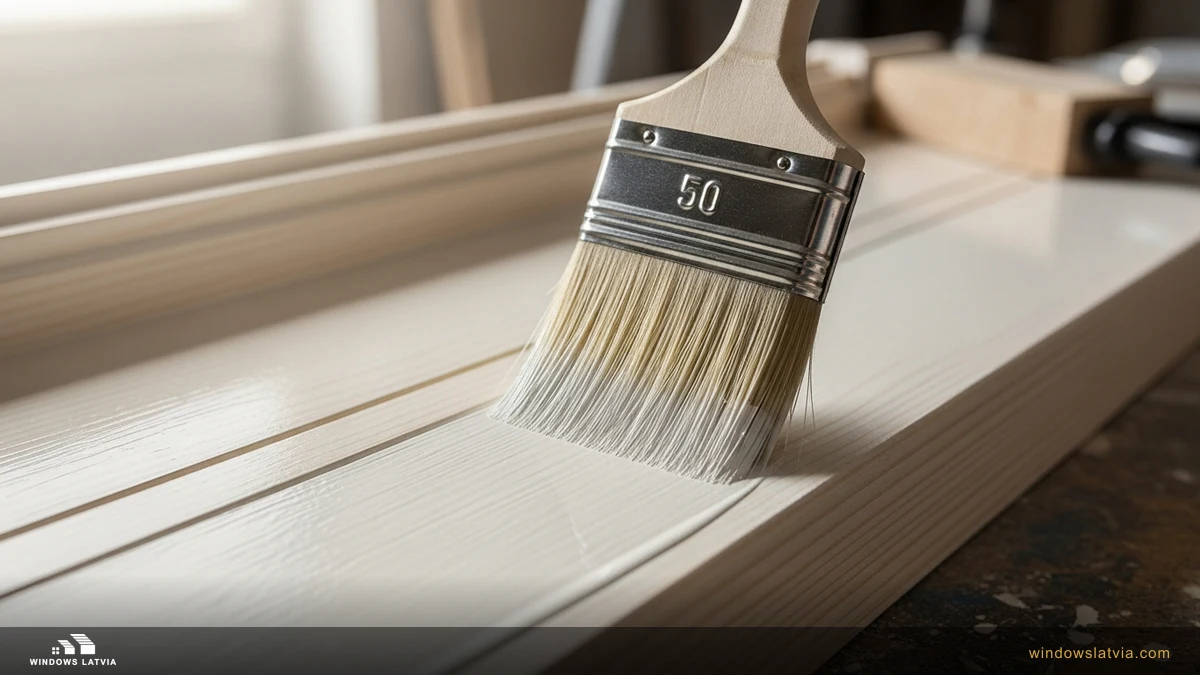
For homeowner repaint work: a good synthetic-bristle brush in 38 mm and 63 mm sizes, plus a short-nap microfibre mini-roller for the larger flat surfaces. Brands worth buying are Purdy, Hamilton Perfection, and Wooster. A £20 brush outlasts three £5 brushes and lays a better finish.
Spray application gives the smoothest result but requires masking the glass, the walls, and the ground, plus an HVLP gun. Not realistic for a homeowner tackling a single house. Leave spray finishes to the manufacturer or a specialist contractor.
Common Mistakes We See Every Year
- Painting straight onto silicone: paint will not key to sealant. Mask it with low-tack tape instead.
- Recoating while the first coat is still tacky: trapped solvent causes lifting and cissing.
- Using interior paint because it was in the shed: guaranteed failure within two years.
- Painting a shut window: you will glue the sash to the frame. Open and close the sash every hour during drying.
- Ignoring south-facing sills: they take ninety percent of UV damage. Add an extra topcoat there.
- Starting on the sunniest elevation first: paint surface skins before the depth cures. Always shade-first.
Maintenance Schedule After Repaint
Once you have redone the system properly, expect the following rhythm:
| Year | Action | Time investment |
|---|---|---|
| 1 | Inspect all elevations at 6-month mark | 30 min |
| 2-5 | Annual wash with mild detergent | 20 min/year |
| 5-8 | Light sand, spot repair, maintenance coat south side | Half-day |
| 8-12 | Full system recoat, all elevations | 2-3 days |
A correctly prepared and painted exterior wooden window should never need stripping back to bare wood during its sixty-year structural life. If it does, either the substrate was already compromised or the wrong paint system was used the last time.
When Repainting Is the Wrong Answer
If more than about fifteen percent of the frame shows active rot, soft wood that a screwdriver sinks into, or if the glazing beads are split and weeping, repainting will hide the problem for six months and then the frame will fail structurally. At that point, you are better off with new windows. Our Latvian-manufactured timber windows are typically 30 to 40% below the cost of equivalent Scandinavian brands, with the same TEKNOS coating system applied under factory conditions, so the replacement calculation is friendlier than most homeowners expect.
For a sensible conversation about whether a repaint or a replacement is the right move for your house, the quickest route is our contact form or a direct call to Uldis on +371 25 152 244.
Our Factory Coating System
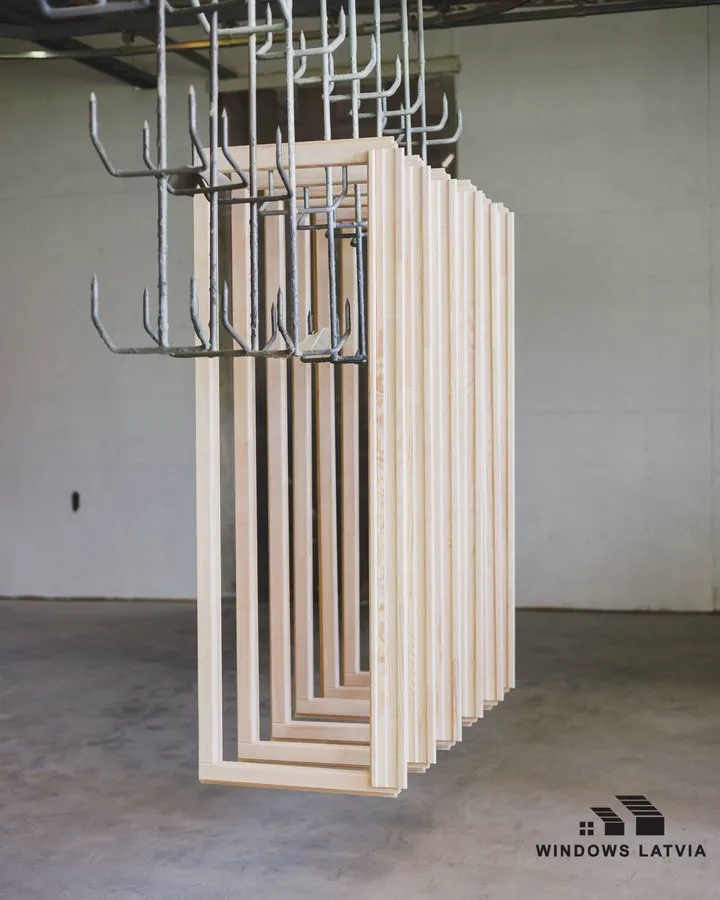
For context - what goes on every Windows Latvia frame before it leaves Kalnciems:
- Coat 1: TEKNOS Antistain Aqua primer, sprayed, 2 hours cure.
- Coat 2: TEKNOS Aquatop 2600 base, sprayed, intermediate sand.
- Coat 3: TEKNOS Aquatop 2600 topcoat, sprayed, 4 hours cure.
- Coat 4: Second TEKNOS Aquatop 2600 topcoat on exposed elevations.
Applied in controlled factory humidity (55-65%) and temperature (18-22°C). Every frame is moisture-checked at two stages in the production line and rejected if the timber is above 14%. That single quality gate - substrate moisture - is what separates factory coating longevity from DIY repaint longevity, and it is the variable we see go wrong most often when inspecting premature paint failure on customer sites. A homeowner with a brush cannot match the controlled atmosphere, but matching the moisture requirement (dry timber, not the day after rain) closes most of the gap.
Our factory has shipped timber windows to 19 countries over the past decade, and of the independent test reports commissioned on our profiles, eleven cover accelerated weathering on the coating system described above. The data extrapolates to projected service life well beyond our published 60-year structural target in typical UK and Irish climate zones.
Frequently Asked Questions
Can I paint over existing paint without stripping?
Yes, if the existing film is sound: no lifting, no flaking, no chalking. Sand to provide key, spot-prime any bare patches, and topcoat. If the existing paint is failing anywhere, strip that elevation back to bare wood and build the system up again.
What is the best paint colour for exterior wooden windows?
Light colours reflect solar heat and last longer; dark colours absorb heat, expand the wood, and stress the paint film faster. If you want a dark frame, budget for maintenance coats every six to eight years rather than ten to twelve.
How much paint do I need for one window?
Roughly 0.5 litres of primer and 0.5 litres of topcoat per average 1200 × 1400 mm window for two coats on both sides. A 2.5 L tin is enough for four to five windows.
Can I paint wooden windows in winter?
Not with conventional waterborne or alkyd products. Temperature and humidity requirements rule out November through February in most of Europe. There are specialist cold-cure primers, but for DIY application, wait for spring.
Do I need to remove the glass before painting?
No. Mask the glass with low-tack painter's tape two to three millimetres back from the timber, paint onto the tape, then remove the tape before the final coat has fully dried. This gives a clean line without the risk of damaging the glazing bead.
Is there a paint that matches what factories use?
TEKNOS sells its Aquatop range through trade merchants in most European countries. Availability in the UK is through specialist decorators' suppliers rather than high-street DIY stores. If your nearest merchant stocks it, use it - you are getting the exact product a factory would apply.
Related Articles
- How to paint wooden windows: 6-step manufacturer guide
- How long do timber windows last? (60+ years explained)
- Wooden windows vs uPVC: real cost comparison 2026
Next Steps
Now you have the brand names, the preparation sequence, and the weather rules. If you are confident in applying the system yourself, any of the top three brands above plus a two-weekend timeline will give you a durable result.
If the timber has visible damage that goes beyond cosmetic fade, or if you want factory-applied finish quality on new replacement windows, our team at Windows Latvia is the direct route. Our full product range covers everything from heritage sash replacements to Passivhaus specifications, with the TEKNOS system applied under factory conditions before the frame ever leaves Kalnciems. A replacement window installed in a UK owner-occupied dwelling should go in via a FENSA- or Certass-registered installer to comply with Building Regulations Approved Document L without a separate building control application - we work with installers who hold these registrations. Call Uldis on +371 25 152 244, email [email protected], or use our contact form to get a sensible quote.
Written by Uldis Tretjakovs, Technical Manager at Windows Latvia, based on coating specifications the factory has used since 2005.
Need Expert Advice?
Our team can help you choose the right windows for your project - from energy ratings to installation.
Get a Free Quote