
The short version
- Modern timber windows are engineered (laminated) wood with factory-applied microporous coatings, not the rot-prone joinery of 40 years ago. Expect a 50 to 60+ year service life.
- In 2026, supplied-and-installed timber casements cost roughly £850 to £1,500 per window in the UK and €1,000 to €1,800 in Ireland. Sash windows cost more.
- Replacement windows must hit a 1.4 W/m²K whole-window U-value across the UK. Ireland's building-regs backstop is 1.6, but the SEAI grant requires 1.4. Modern timber double glazing clears 1.4 comfortably; triple glazing reaches 0.7 to 0.9.
- Ireland introduced a standalone SEAI windows grant in 2026, worth up to €4,000 depending on house type. Check current terms on the SEAI website before you commit.
- The right wood depends on finish and budget: engineered redwood for painted frames, Accoya for the longest maintenance-free life, oak or sapele for a clear-stained hardwood look.
Plastic ages badly, and it shows. Plenty of homeowners only start looking seriously at timber after watching a neighbour's grey, brittle uPVC drag down an otherwise smart house. Timber windows have quietly become a considered purchase again. Part of it is aesthetic, since heritage homes and high-spec new builds both look wrong in plastic. Part of it is performance: a well-made wooden frame now competes with anything on thermal efficiency. And part of it is simple arithmetic. A window you can repair and repaint for 60 years works out cheaper over its life than one you bin every 25. We put real figures on that in our 25-year timber vs uPVC cost comparison.
This guide covers what actually matters when you specify or buy timber windows in 2026: honest costs for the UK and Ireland, which wood to choose, the U-values to ask for, how long they really last, and the building regulations and grants that change the maths. We make timber windows in Latvia and ship across Europe, so the numbers here reflect what the market charges rather than what any single brand wants to quote.
Why modern timber windows are worth a second look
The reputation of wooden windows is still shaped by the linseed-painted softwood of the 1970s and 80s, which swelled, stuck and rotted because nobody maintained it. Two things changed that. The choice of coating matters here too: see our guide to the best paint for exterior wooden windows.
The first is engineered timber. Instead of a single piece of wood, modern frames are built from laminated sections, with the grain alternated so the profile stays straight and resists the seasonal movement that used to jam sashes. The second is the coating. Factory-applied microporous paints and stains flex with the timber and let water vapour escape, which is why a modern finish lasts years rather than a single wet winter.
The result is a window that holds its shape, holds its finish, and can be sanded back and recoated decades later instead of being thrown into a skip. That repairability is the quiet advantage plastic cannot match.
Timber vs uPVC vs aluminium: an honest comparison
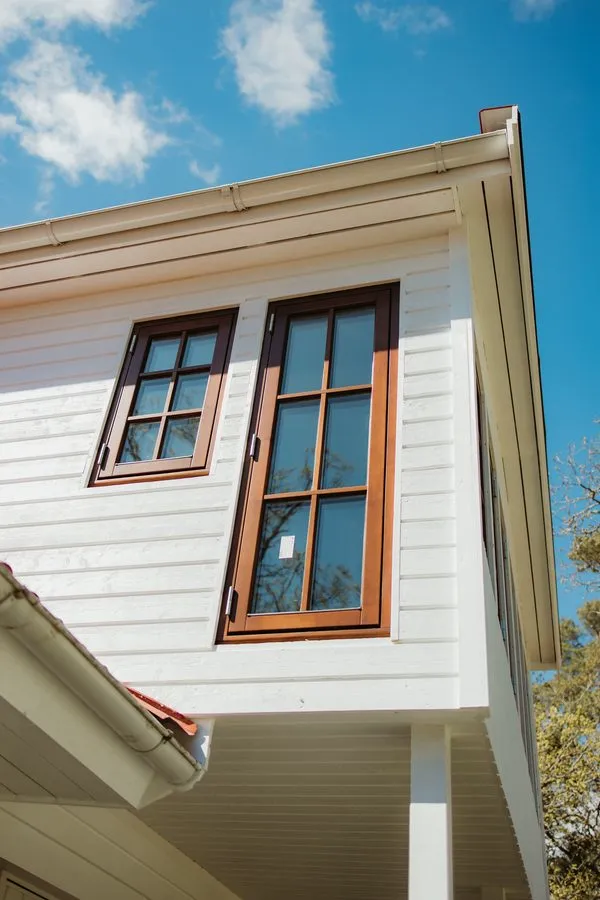
No frame material wins on every count. uPVC is cheaper up front and genuinely low-maintenance. Aluminium gives the slimmest sightlines for big modern glazing. Timber wins on longevity, repairability, heritage suitability and carbon. Here is the trade-off in one view.
| Factor | Timber | uPVC | Aluminium |
|---|---|---|---|
| Upfront cost | High | Low | Medium to high |
| Realistic lifespan | 50 to 60+ years | 20 to 30 years | 40+ years |
| Thermal performance | Excellent (wood barely conducts heat) | Good to excellent | Needs a polyamide thermal break to compete |
| Repairability | High: splice, fill, sand, recoat | Effectively none | Low: powder coating is hard to touch up |
| Heritage and planning | Usually required in conservation areas | Often refused | Rarely approved on period homes |
| Carbon | Stores carbon; low embodied energy | High embodied carbon, hard to recycle | Very energy-intensive to smelt |
If budget is the only deciding factor, uPVC will win. If you plan to stay in the house, own a period property, or care about whole-life cost and carbon, timber is the rational choice rather than the romantic one. A third option, aluminium-clad timber, puts an aluminium skin over a wooden frame to remove almost all external maintenance while keeping the warm interior, which is why it has become popular in wet coastal climates.
Which wood is best for window frames?
There is no single best timber, only the best fit for your finish and budget. The figures below use the EN 350 durability scale, where Class 1 is very durable and Class 4 is slightly durable. Almost all of these are used as engineered, not solid, sections.
| Wood | EN 350 durability | Relative cost | Best for |
|---|---|---|---|
| European redwood / Scots pine (softwood) | Class 3 to 4 | Lowest | Painted frames; the best insulator of the common options |
| European or Siberian larch (softwood) | Class 3 to 4 | Medium | Natural and clear-stained finishes |
| Sapele / meranti (hardwood) | Class 3 | Medium to high | Stable frames that paint beautifully; a cost-effective oak alternative |
| European oak (hardwood) | Class 2 | High | Clear-finished, statement joinery |
| Accoya (acetylated softwood) | Class 1 | Premium | The longest maintenance-free life; 50-year rot guarantee |
A few practical notes. A lot of buyers still hear "softwood" and think "cheap". In reality, engineered redwood is what most high-end painted windows are made from: it insulates well and takes paint cleanly. Oak looks superb under a clear finish, but it conducts more heat, and its tannins can stain non-stainless steel ironmongery, so it needs the right hardware. Accoya costs the most and pays it back in coating life, since paint on dimensionally stable timber lasts roughly twice as long.
The one specification that matters more than species is the word engineered. Solid, unlaminated softwood will eventually move. Always confirm the frames are laminated.
Glazing, U-values and energy performance
Wood is a natural insulator. Its thermal conductivity is around 0.13 W/mK, so the frame itself does not become a cold bridge the way an untreated aluminium frame does. That gives timber a head start, and the glazing does the rest.
| Glazing | Build-up | Typical Uw (W/m²K) |
|---|---|---|
| Double | 24 to 28mm unit, low-E coating, argon fill, warm-edge spacer | 1.2 to 1.4 |
| Triple | 36 to 44mm unit, two low-E coatings, argon or krypton fill | 0.7 to 0.9 |
For most homes, well-specified double glazing already clears building regs, and that is genuinely enough. Triple glazing starts to earn its place when the house is exposed, noisy, or you are chasing Passivhaus-level numbers. When you compare quotes, ask for the whole-window U-value (Uw), not the glass-only figure (Ug); regulations and comfort are based on the Uw. If noise is the real problem rather than heat, specify acoustic laminated glass. Timber frames are stiff enough to carry the extra weight.
Window styles and how they affect cost
The style you choose shapes both the look and the price.
- Casement. Hinged at the side or top, this is the most common and most affordable style. A tight compression seal also makes casements the easiest way to reach low U-values.
- Sliding sash. The traditional choice for Georgian, Victorian and period homes, with vertically sliding sashes on cords and weights or spring balances. The mechanism and heritage detailing make sash the most expensive style.
- Tilt-and-turn. A European design that opens two ways: tilting in at the top for secure ventilation, or swinging fully inward for cleaning and escape. Practical for upper floors and awkward openings; we build these as tilt and turn windows.
- Flush casement. A casement whose sash sits flush within the frame for a clean cottage line, popular in rural settings and on listed buildings.
- Outward-opening. The Scandinavian approach, where the sash opens outward to shed water and free internal sill space, well suited to exposed sites.
As a rule, casements are the budget baseline, tilt-and-turn sits in the middle, and sliding sash carries the heritage premium. Mixing styles across one house is normal: sash to the street for character, casement or tilt-and-turn to the rear for cost and convenience.
How much do timber windows cost in 2026?
Timber typically costs 50 to 80 per cent more than standard uPVC up front. Casements are the baseline; sliding sash windows cost more because of the cords, weights or spring balances and the heritage detailing. Prices vary with wood species, glazing, size and whether the unit is standard or bespoke.
| Window type | UK (GBP) | Ireland (EUR) |
|---|---|---|
| Timber casement | £850 to £1,500+ | €1,000 to €1,800 |
| Timber sliding sash | £1,200 to £2,500+ | €1,500 to €2,500+ |
| Per m² guide | £800 to £1,300 | €900 to €1,400 |
Upgrading from softwood to oak or Accoya adds roughly 30 to 50 per cent. Acoustic or ultra-slim heritage glazing, bespoke sizes and premium ironmongery push the figure up too. Treat any quote far below these ranges with caution: it usually means thinner sections, a lesser coating or solid rather than engineered timber.
So why are timber windows this expensive, and are they worth it? The price reflects what they are: made to order from slow-grown wood, finished in a controlled coating line, and built to be repaired rather than thrown away. Spread across a 50 to 60 year life, the yearly cost often undercuts uPVC that gets torn out twice in the same period. The timber windows that disappoint people are almost always the cheapest ones, where a thin profile and a weak coating fail early and give the whole material a bad name.
Lifespan and maintenance: the honest version
A factory-finished engineered timber window will realistically last 50 to 60 years or more, and Accoya frames carry a 50-year guarantee against rot. uPVC, by comparison, tends to last 20 to 30 years before the plastic discolours or the seals fail and the whole unit is sent to landfill.
The myth that wooden windows need repainting every two years belongs to the old solid-softwood era. Modern microporous factory coatings ask for very little: a wash once a year, a check of the seals, and a maintenance topcoat roughly every 8 to 12 years depending on how exposed the window is. South and west elevations weather faster than sheltered north faces. Over a 60-year life that is a handful of recoats, against one or two complete replacements for plastic. The honest catch is the coating, not the wood: most people over-worry about the timber and under-worry about the finish spec, which is what really decides how often you pick up a brush.
UK: building regulations, conservation areas and what to check
Replacing windows in the UK is controlled work, so the regulations matter as much as the product.
- U-value. Across England, Wales and Scotland, replacement windows must achieve a whole-window U-value of 1.4 W/m²K (or an equivalent Window Energy Rating). New builds must do better, with Scotland setting 1.2 W/m²K for new dwellings.
- Trickle vents. In England and Wales, Part F generally requires background ventilation (usually trickle vents) on replacement windows unless the home has a whole-house system such as MVHR. Scotland and Ireland set their own ventilation rules. This catches a lot of buyers by surprise.
- Conservation areas and listed buildings. Changing the appearance of windows usually needs planning permission or listed building consent. Historic properties can be exempt from the 1.4 U-value rule where compliant glazing would harm the building's character, which is where slim-profile heritage double glazing earns its place.
- Certification. In England and Wales, a supply-only purchase means your installer must be FENSA or Certass registered; otherwise you pay Building Control to sign off the work, often £200 to £400 or more. Scotland works through a building warrant, and Ireland through its own building control rules.
- VAT. Replacement windows carry the standard 20% VAT. They do not qualify for the zero-rate energy-saving relief that covers items like insulation and heat pumps, except as part of a qualifying new build.
Ireland: nZEB standards and the new SEAI windows grant
Irish building regulations set a 1.6 W/m²K backstop for replacement windows (1.4 W/m²K for new dwellings). The SEAI windows grant, though, requires 1.4 W/m²K or better, so most grant-aimed projects fit 1.4 anyway. Many Irish buyers now specify triple glazing as standard, helped along by a wet, exposed climate that rewards durable frames.
The bigger 2026 change is financial. Ireland introduced a standalone SEAI windows grant, so homeowners no longer need a full deep-retrofit project to get support for windows.
| Property type | Windows grant |
|---|---|
| Detached | €4,000 |
| Semi-detached or end-terrace | €3,000 |
| Mid-terrace | €1,800 |
| Apartment | €1,500 |
External doors attract €800 each, up to two. To qualify, the home must have been built and occupied before 2011, must already have attic and wall insulation rated good or very good (or meet the equivalent heat-loss standard), and the new windows must achieve 1.4 W/m²K or better, fitted by an SEAI-registered contractor. The insulation prerequisite is the one most applicants miss, so check your BER advisory report before you order. Grant terms change, so confirm the current detail on the SEAI website before committing.
Buying timber windows from a European manufacturer
A lot of the timber windows fitted in the UK and Ireland are made in mainland Europe, where large, specialised joineries hold the certifications and finishing lines that smaller workshops cannot. Buying from a European maker like us is normal practice, but it pays to check a few things before you order.
- Certified performance. Ask for the tested Uw value and CE marking (or UKCA in Great Britain) to EN 14351-1, not a marketing figure.
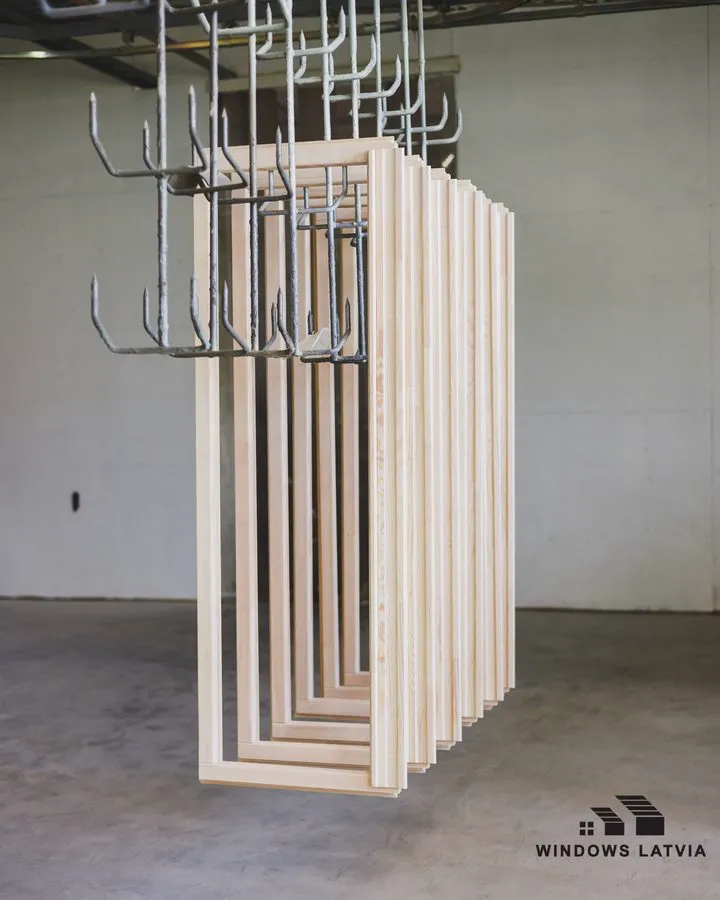
- Engineered timber and a named coating. Confirm laminated sections and a recognised factory coating system such as Teknos, with its own finish warranty.
- Hardware. Multi-point locking and quality ironmongery from a known maker such as Siegenia, rated for the size and weight of the sash.
- Warranty breakdown. A headline number means little. Check the separate guarantees for the frame, the paint finish, the sealed glazing units and the ironmongery, because they differ.
- Installation and certification. Agree who fits the windows and how the work will be certified locally (FENSA or Certass in England and Wales, a building warrant in Scotland, an SEAI-registered installer in Ireland for grant work).
You can see the systems we build, from Scandinavian outward-opening windows to quadruple-glazed units and aluminium-clad timber, across our full range, and read more about how and where we make them.
Frequently asked questions
Are wooden windows worth it compared to uPVC?
How long do modern timber windows last?
Do wooden windows really need a lot of maintenance?
How long does a timber window order take?
Which wood is best for window frames?
Can I get a grant for timber windows in Ireland?
Are timber windows allowed in a conservation area?
Planning a timber window project?
Tell us your sizes, glazing and finish, and we will give you a clear, certified quote for windows made in our own factory.
Need Expert Advice?
Our team can help you choose the right windows for your project - from energy ratings to installation.
Get a Free Quote