Two separate break-in attempts. Axes, crowbars, and heavy blows. The glass cracked but never pierced. The locks never yielded. Here is what happened.
Our burglar resistant wooden windows were put to the ultimate real-world test. Two private residences fitted with our timber windows were targeted by burglars on separate occasions in 2018 and 2019. In the first incident, attackers used axes and crowbars to strike both the glazing and the wooden frame of a three-section sliding door. In the second, a door and a small window were hit repeatedly with a blunt heavy object.
In both cases, the outcome was the same: the intruders failed to enter the building. The laminated triple-pane glass developed a characteristic spider-web crack pattern but the PVB interlayer held every fragment in place - no hole, no breach. The SIEGENIA multi-point locking mechanism remained locked even as the surrounding wood was chipped away by an axe. The attackers gave up.
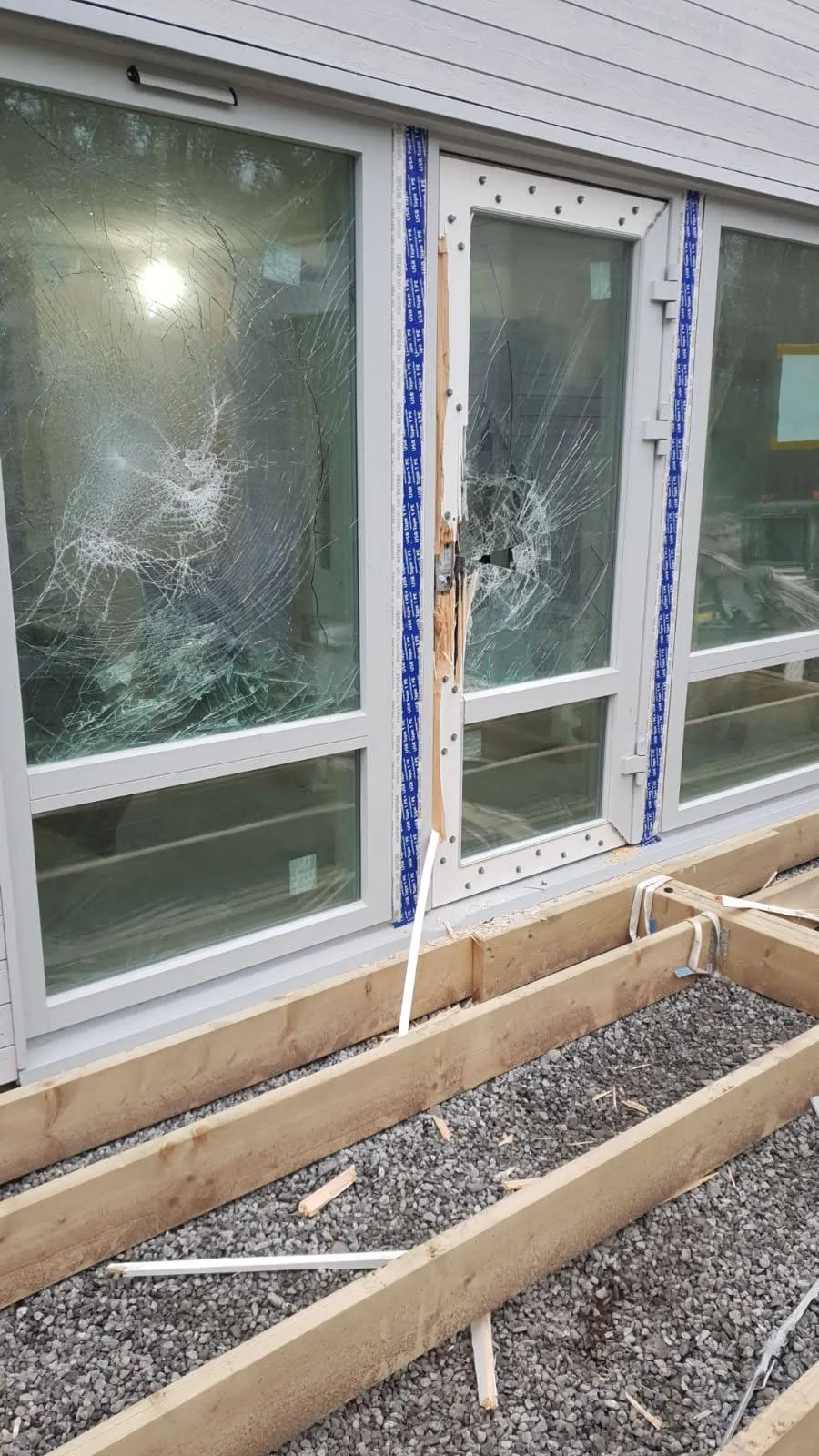
Three-panel sliding door after an axe attack. Glass cracked but not pierced. Frame damaged but lock held.
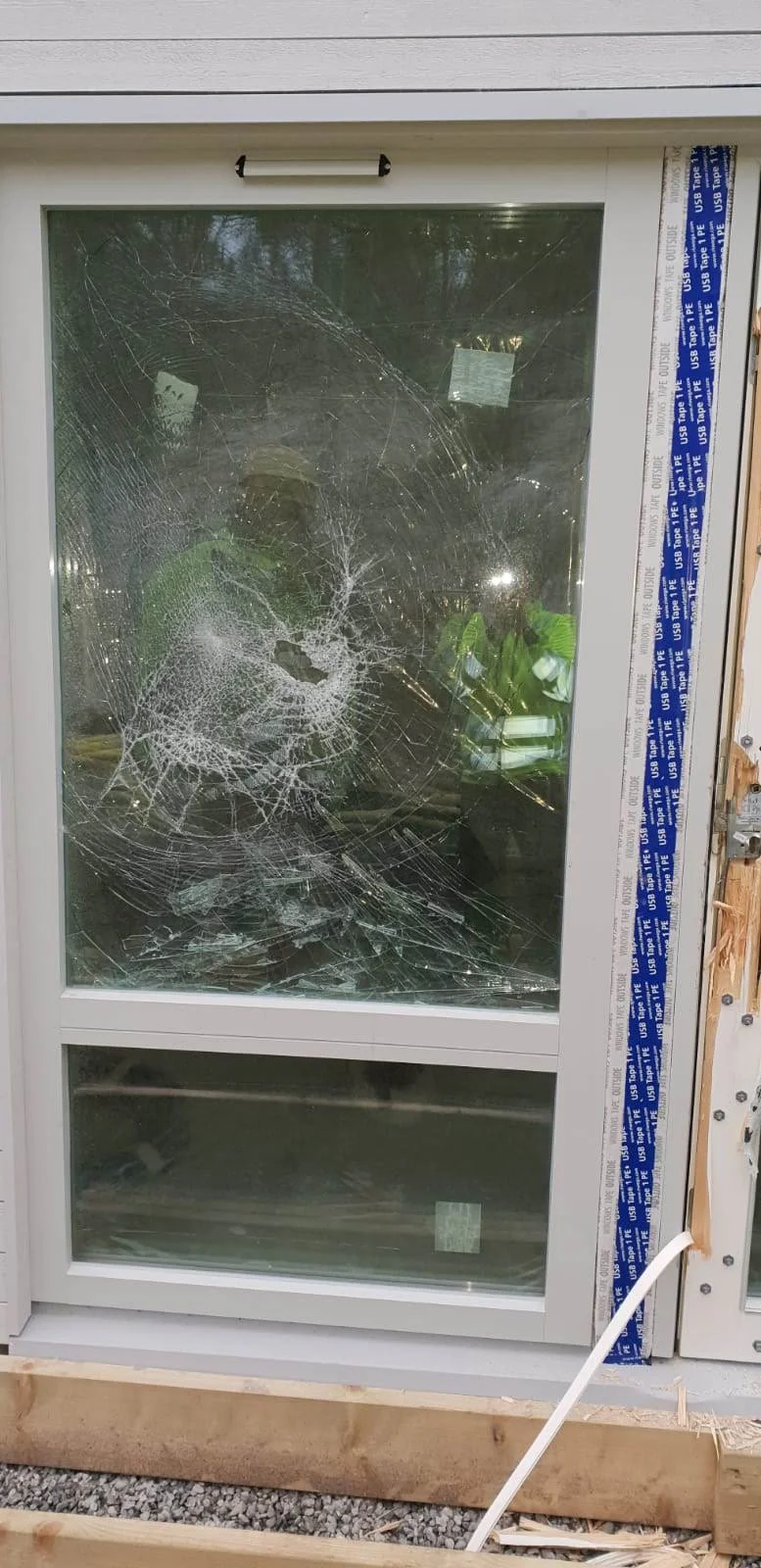
Spider-web crack pattern. The PVB interlayer bonded every fragment - no breach point.
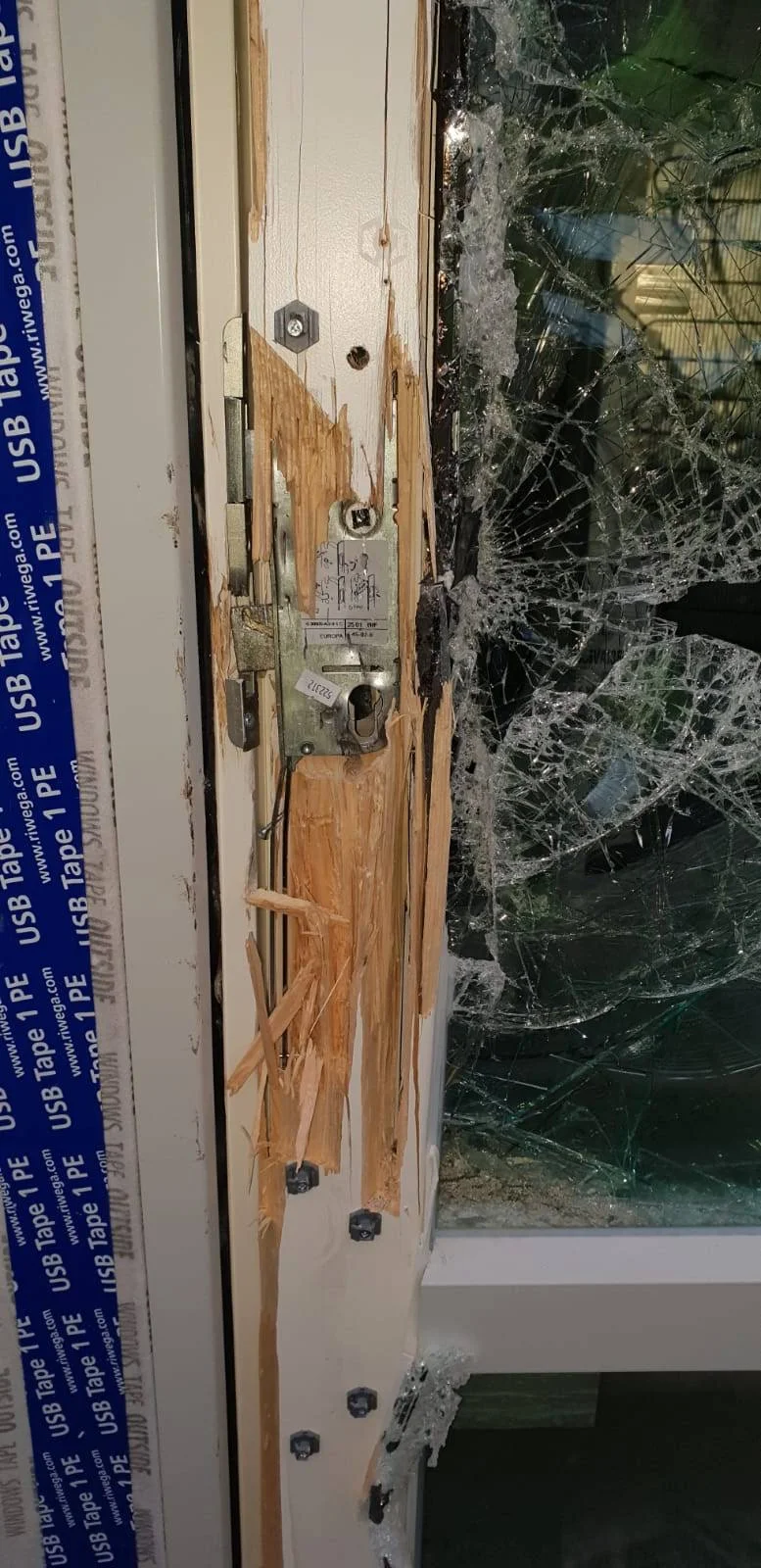
SIEGENIA multi-point lock exposed by axe damage to frame. Every locking point remained engaged.
Months later, a second residence with our windows was targeted. A door and a small window received concentrated blows from a heavy object. The glass showed a circular fracture pattern from the point of impact - but again, the laminated pane held. The window was opened afterwards from the inside for inspection: the SIEGENIA hinges and locking points were undamaged.
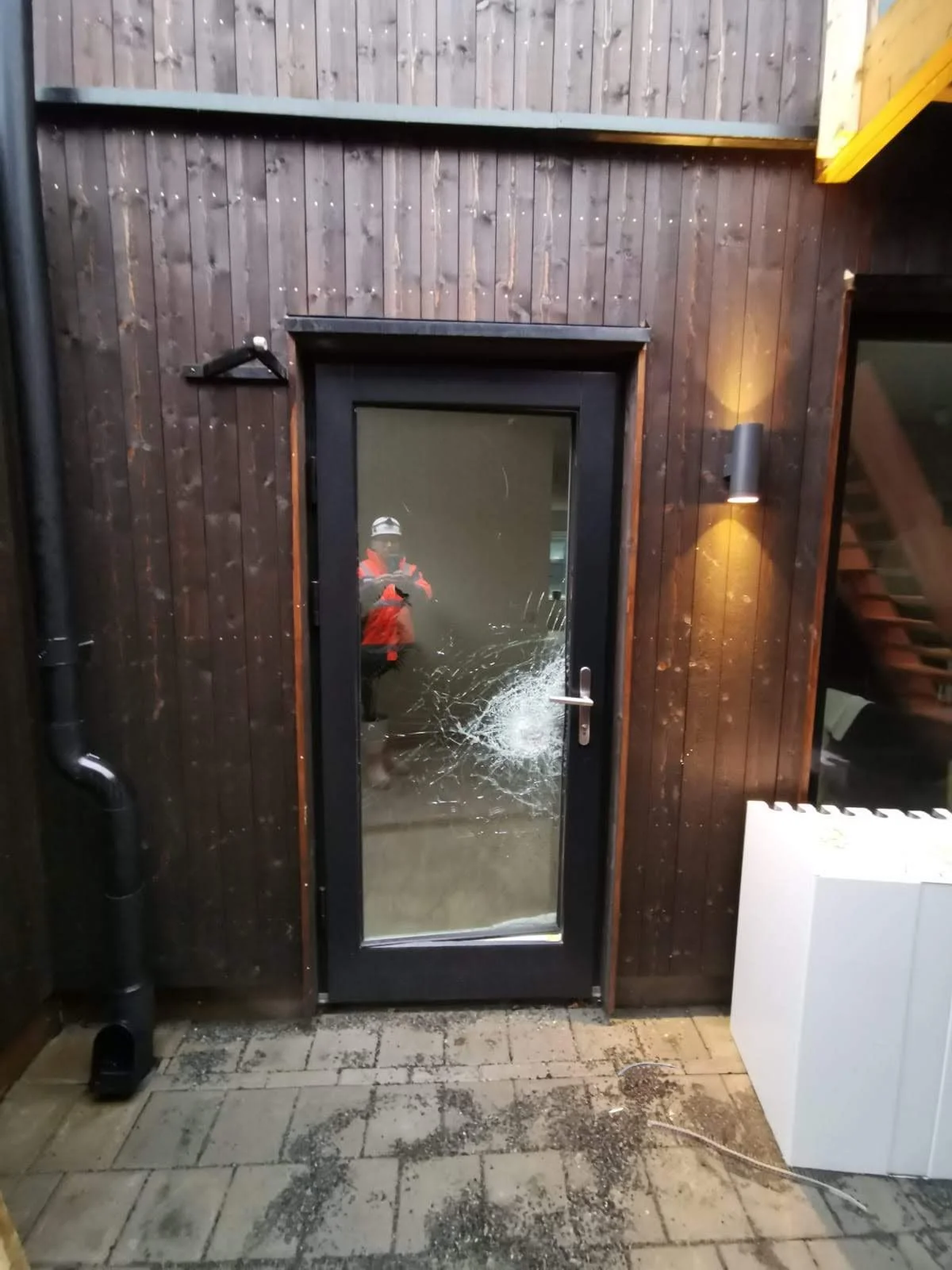
Second incident - door glass cracked but held together. No entry achieved.
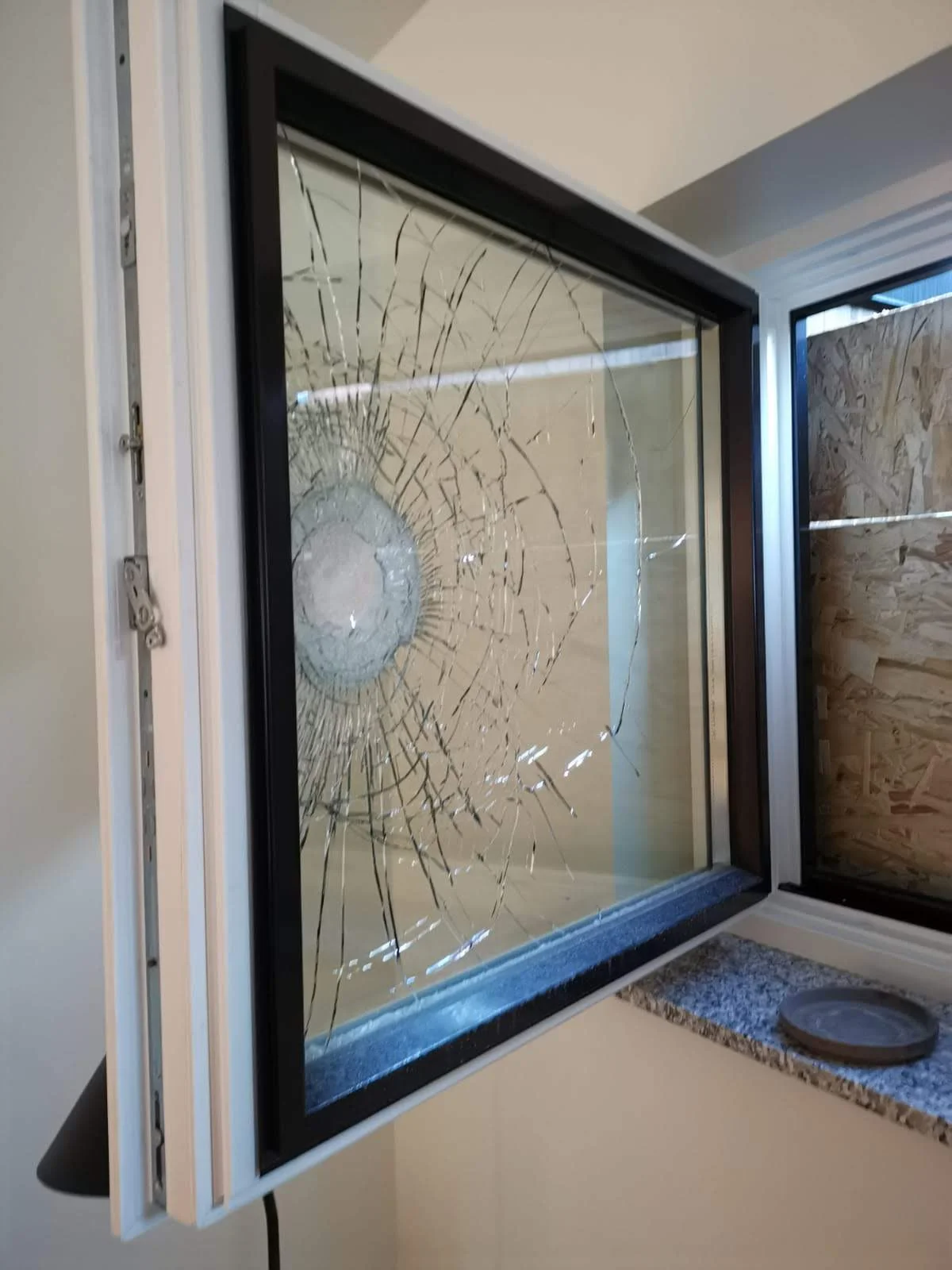
Interior view showing circular impact. Window opened for inspection - hinges and locks intact.
This was not luck. Every component in our burglar resistant wooden windows is engineered to resist forced entry as a system - glass, frame, hardware, and installation working together.
PVB (polyvinyl butyral) interlayer bonds glass panes together. On impact, shards stay bonded in a spider-web pattern instead of falling out. No hole, no entry point.
Multiple locking points distributed across the frame edge. Even when attackers damaged the surrounding wood, the steel lock mechanism stayed engaged at every point.
Glass is secured from the inside of the frame (internal beading). A burglar cannot remove the glass from outside without first breaking through the frame itself.
The European Standard EN 1627 classifies burglar resistance from RC1 (basic force) to RC6 (professional power tools). RC4 covers attacks with axes, hammers, and battery-powered tools sustained for 10 minutes.
Our windows are not formally RC-certified (that requires laboratory testing of the complete unit). However, the real-world attacks documented above involved RC4-class tools (axes, crowbars) - and our windows held. We use RC-grade components: SIEGENIA hardware and PVB laminated glazing that meet the material requirements of RC2-RC3 resistance class hardware.
Every burglar resistant wooden window we manufacture - from our entry-level profiles to quadruple-glazed premium units - uses the same laminated glazing technology and German multi-point locking hardware that stopped the attacks documented above. This level of protection comes standard across our entire range:
Our windows combine heritage craftsmanship with engineering that holds up under real attack.
Get a Free Security Consultation